An emotional narrative game for a parent and a child in a single-parent family, built on the Satir
family therapy model. One player describes a real conflict; the other has to investigate what sits
underneath it. The interaction design question was how to make somebody else's interior state into
something you actively probe rather than something you assume.
PlayersTwo, asymmetric roles, played together online
ModelSatir iceberg, as an interaction not a metaphor
FeedbackWorld state, not score
StructureThree chapters
Turning the iceberg into an instrument
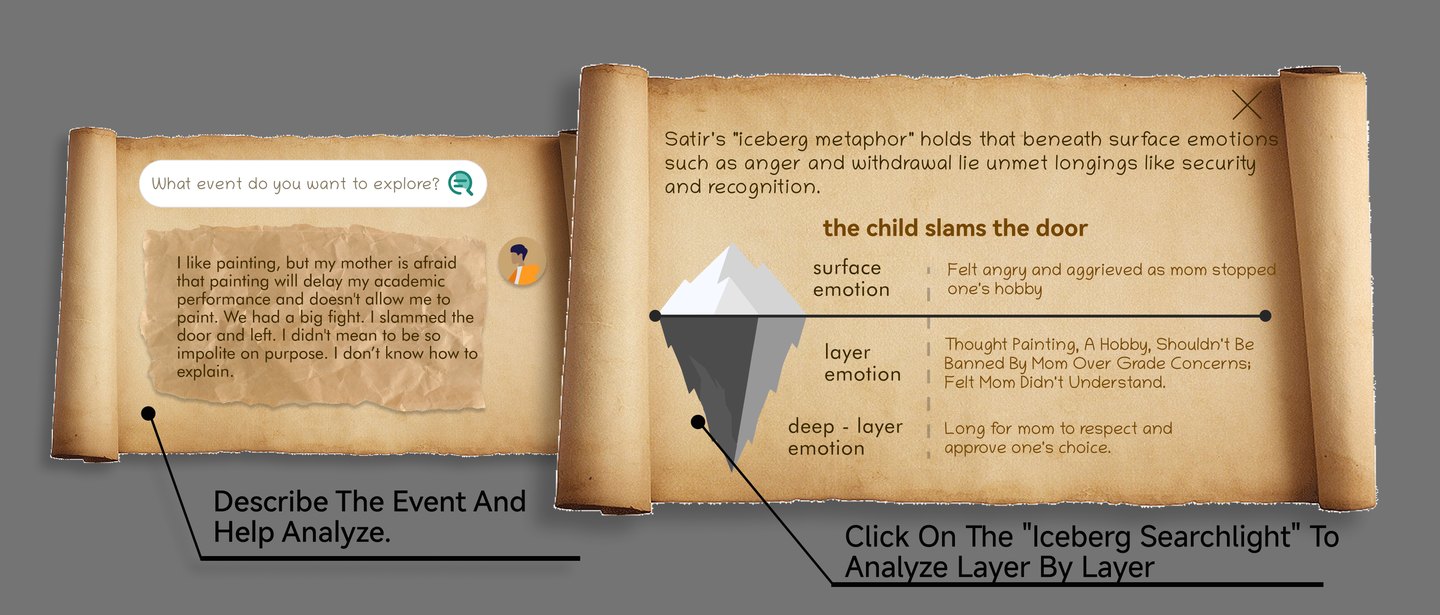
Satir's iceberg holds that beneath surface emotions — anger, withdrawal — sit unmet longings for safety,
recognition, belonging. As a diagram it is something you nod at. The game makes it operable: one player
describes an event, the system produces a layered reading of it, and the other player uses an
iceberg searchlight to step down through surface emotion, to the layer beneath, to the longing
at the bottom.
The design claim is in the verb. Reading a description of someone's feelings is passive and easy to
skip; having to aim an instrument at each layer in turn makes the other person's interior state a thing
you investigate. Comprehension becomes an action with a cost, which is what makes it register.
The iceberg searchlight: surface emotion, layered emotion, and the longing underneath.
Asymmetry as the mechanism
The two players never hold the same information. One authors the event, the other interrogates it, and
they swap. That asymmetry is the point — it reproduces the actual condition of the relationship, where
each side has privileged access to their own experience and none to the other's, and it forces the
exchange the game exists to produce. A symmetric design would have let both players stay in their own
account of what happened.
Repair as state rather than score
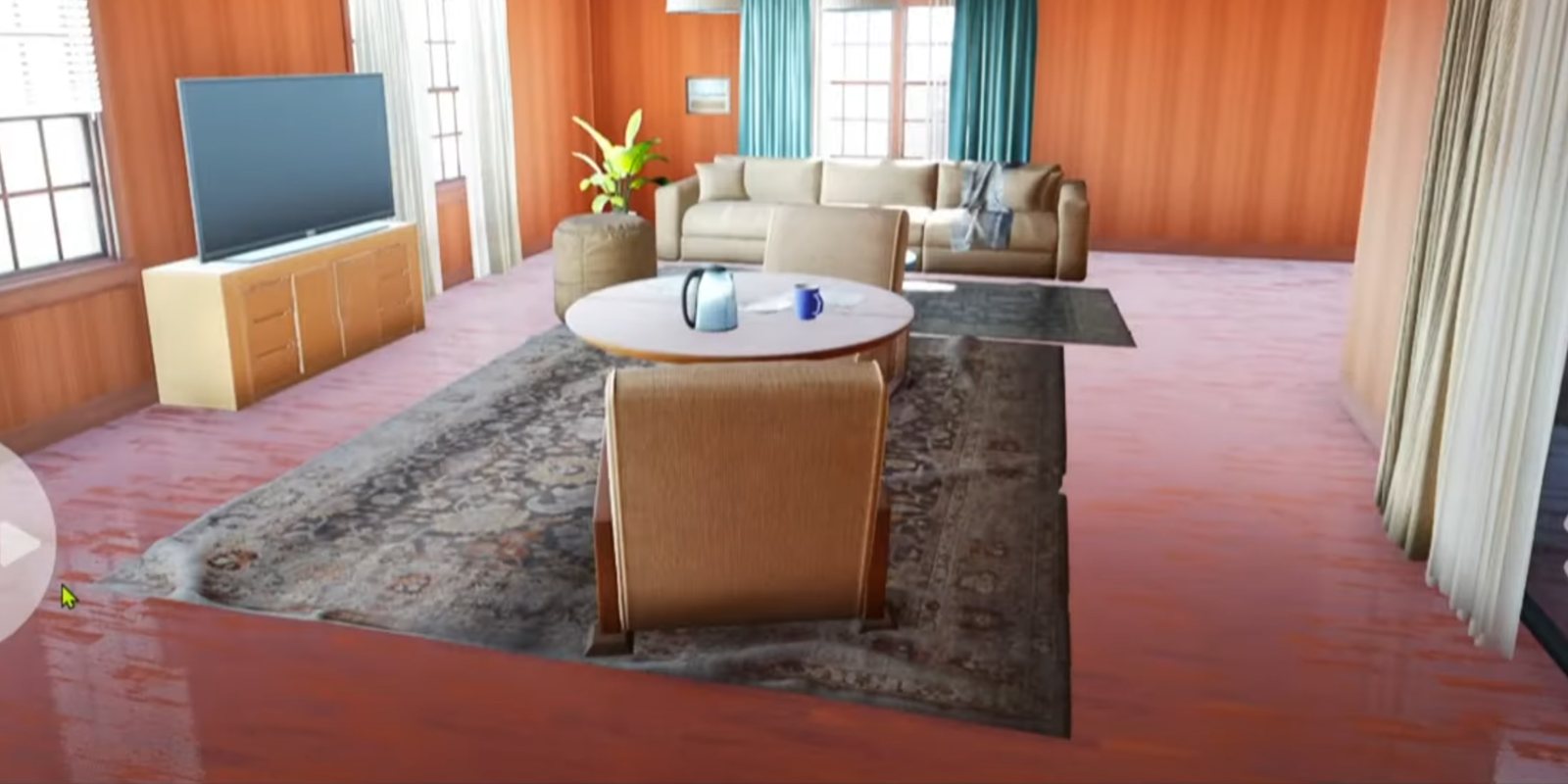
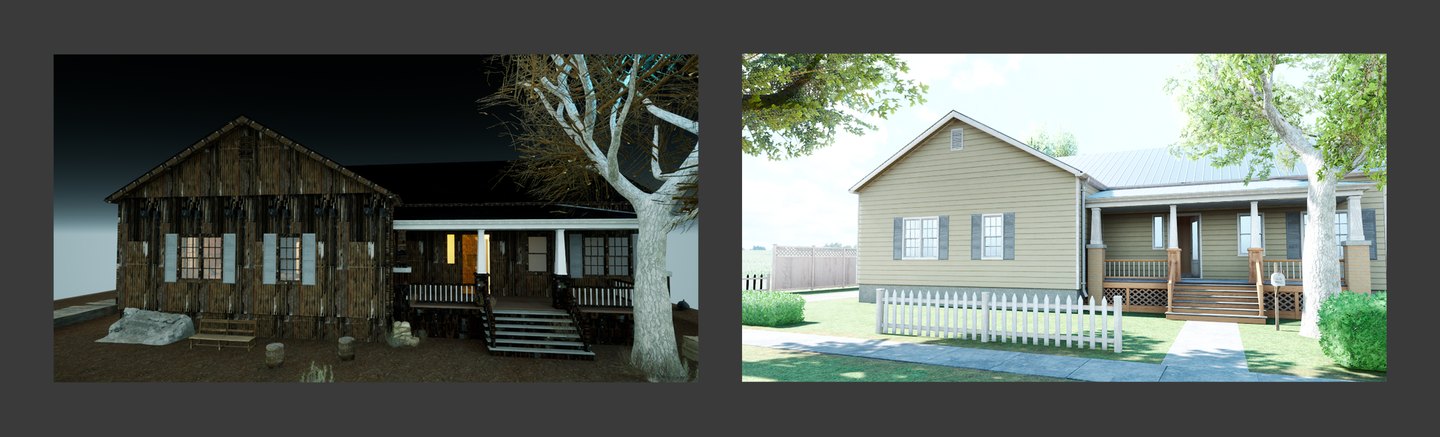
Progress is not a number. Completing a chapter's challenge restores the scene: a room that began damaged
is put back together. Using world state as the readout means neither player is told they did well —
they see it, in a shared space they both occupy. It also avoids the failure mode of scoring an emotional
exchange, which would have made the game something you can lose at.