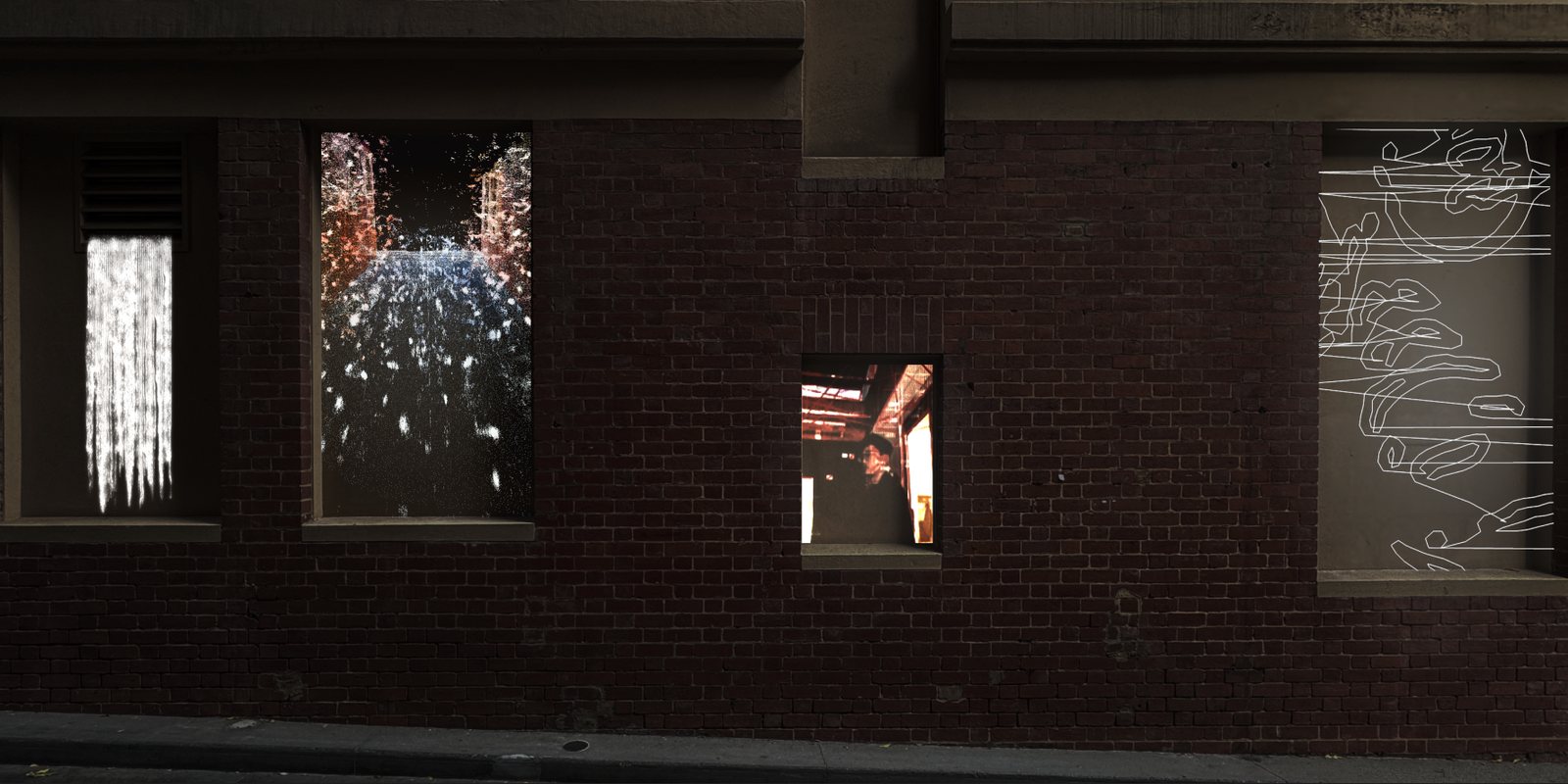
An interactive projection installation in a corridor at RMIT that people walk through rather than stop
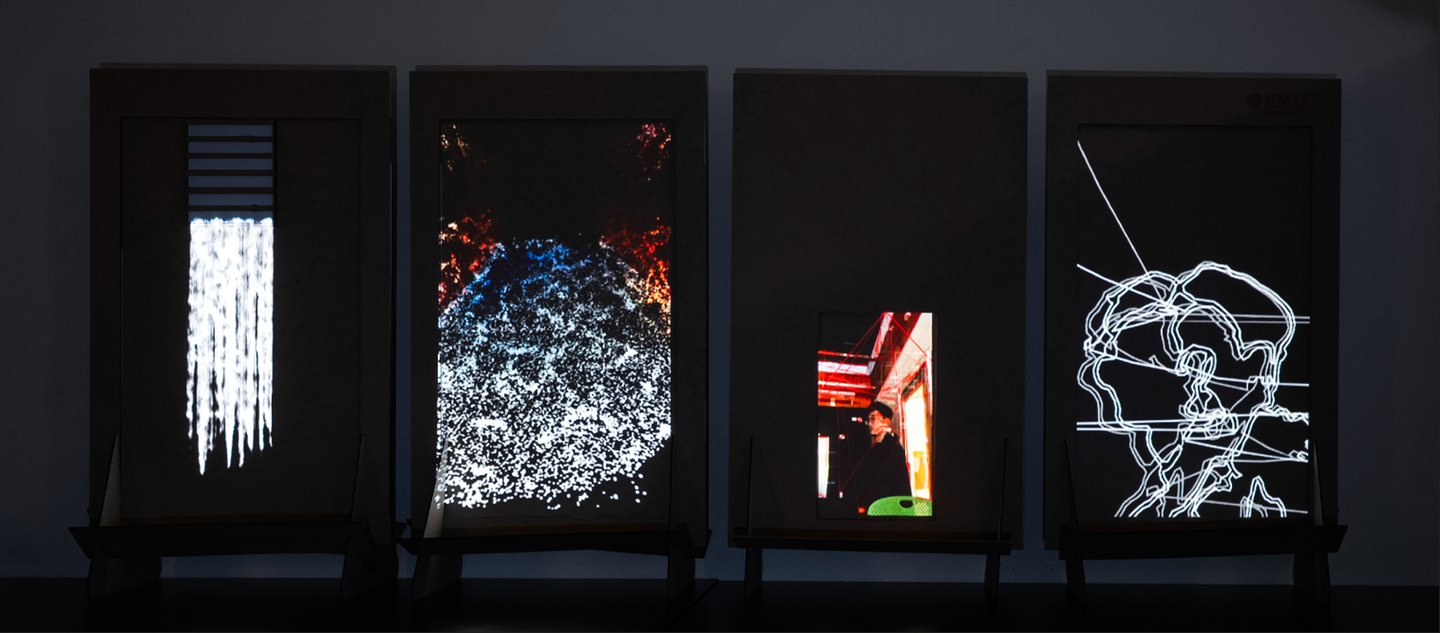
in. Four adjacent frames read the same motion signal and represent it four different ways — a live
silhouette, a data trail, a mark on the environment, and an anonymous flow. Watching them left to right
is watching a person be progressively abstracted by the system that noticed them.
ProjectionComputer visionPassive interaction
InputCamera motion capture, single shared signal
OutputFour representations of that one signal
ConsentPassive — no dwell, no trigger, no opt-in
SettingA through-route, not a destination
Holding the input constant, varying the representation
The design move is a controlled comparison. All four frames consume the same camera-derived motion
signal; what changes between them is only how that signal is rendered. The first is indexical — a
silhouette that maps one-to-one onto the body and fades after a few seconds. The second abstracts to
trajectory: the person becomes a trail. The third records an effect on the environment that persists
after the person has gone. The fourth aggregates, and the individual stops being recoverable at all.
Because the input never changes, the difference a viewer feels between frame one and frame four is
attributable entirely to representation. That is the argument the piece is making: how a system chooses
to depict you determines whether you remain a person in it.
The four frames. Same signal, four levels of abstraction.
Designing for walking pace
In a corridor nobody stops, so latency — not resolution — set the constraints. A silhouette is only
legible as yours if it appears while you are still in front of the frame; a few hundred
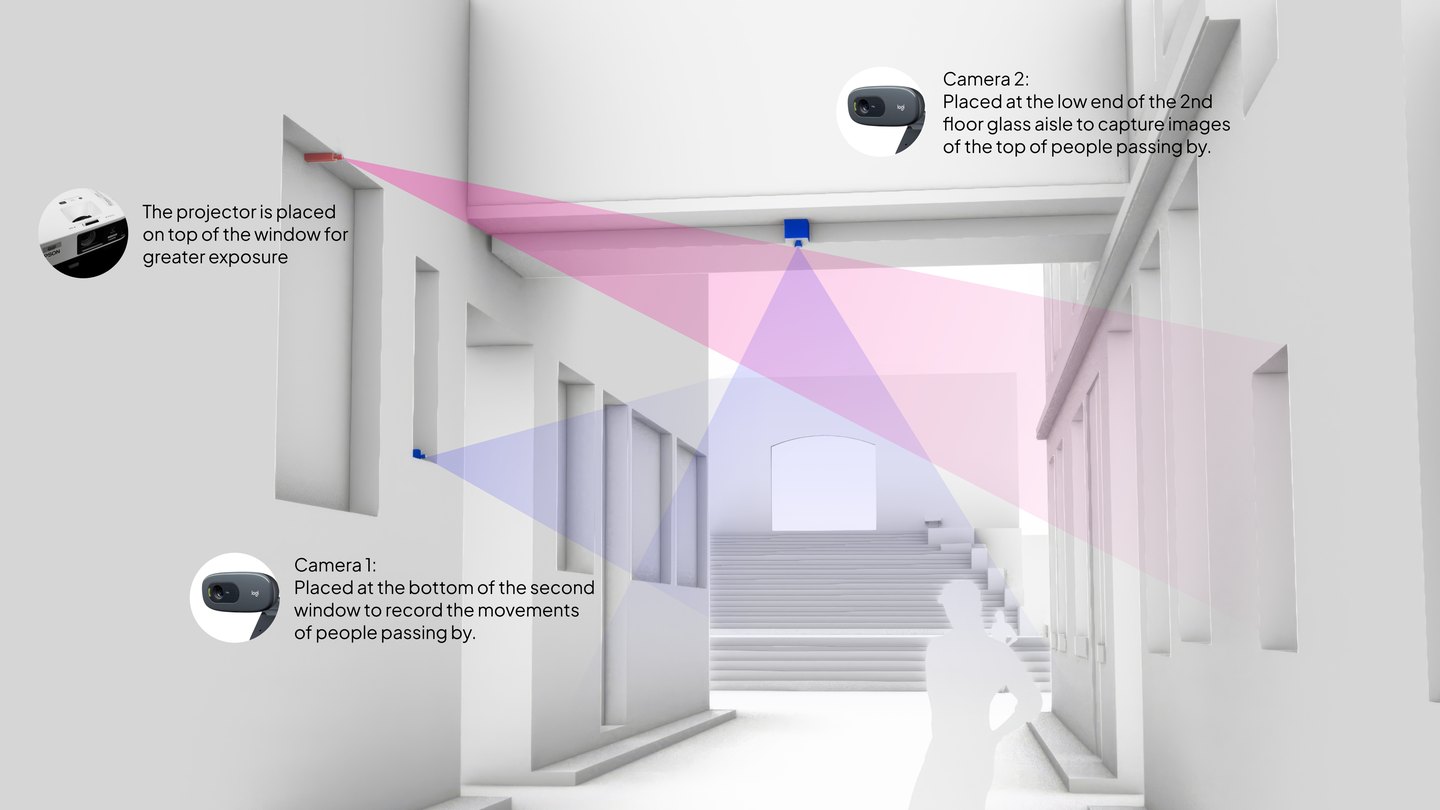
milliseconds late and it reads as someone else's. That pushed the projector above the window for throw
distance and put the camera at the base of the second window, capturing at walking height rather than
overhead, so the detection region matched the strip of floor a person actually crosses.
Projector and camera placement, with the capture and projection volumes mapped onto the site.
Passive interaction and the question of consent
Nothing here asks permission. That is deliberate and uncomfortable in the way it is meant to be: the
piece reproduces the condition it is about, which is being sensed by infrastructure you did not opt
into. The four frames give that condition a legible shape — you can watch yourself become a silhouette,
then a trail, then a statistic, in the time it takes to walk past.